

To the extent that historical press releases reference BMW Manufacturing Co., LLC as the manufacturer of certain X model vehicles, the referenced vehicles are manufactured in South Carolina with a combination of U.S. origin and imported parts and components.
PressClub USA · Article.
BMW NA 50th Anniversary | 50 Stories for 50 Years Chapter 44:” Continuity in a Crisis: BMW NA Survives and Thrives During the COVID-19 Pandemic”.
Wed Nov 05 21:32:00 CET 2025 Press Release
On December 19, 2019, a hospital in Wuhan, China reported the first case of severe acute respiratory syndrome caused by a previously unknown coronavirus that would be identified shortly thereafter as COVID-19. The disease was unusually contagious, and unusually virulent, causing its first fatalities shortly after it was identified
Press Contact.
Thomas Plucinsky
BMW Group
Tel: +1-201-307-3701
send an e-mail
Author.
Thomas Plucinsky
BMW Group
Related Links.
On December 19, 2019, a hospital in Wuhan, China reported the first case of severe acute respiratory syndrome caused by a previously unknown coronavirus that would be identified shortly thereafter as COVID-19. The disease was unusually contagious, and unusually virulent, causing its first fatalities shortly after it was identified.
On January 20, 2020, the first case of COVID-19 was reported in the U.S. Three days later, the city of Wuhan put its 11 million residents under lockdown. The U.S. restricted travel from China, while public health officials urged the population to maintain “social distancing” in response to a shortage of protective masks and other equipment. Infections continued to spread, and the U.S. saw its first COVID-19 fatality on February 6.
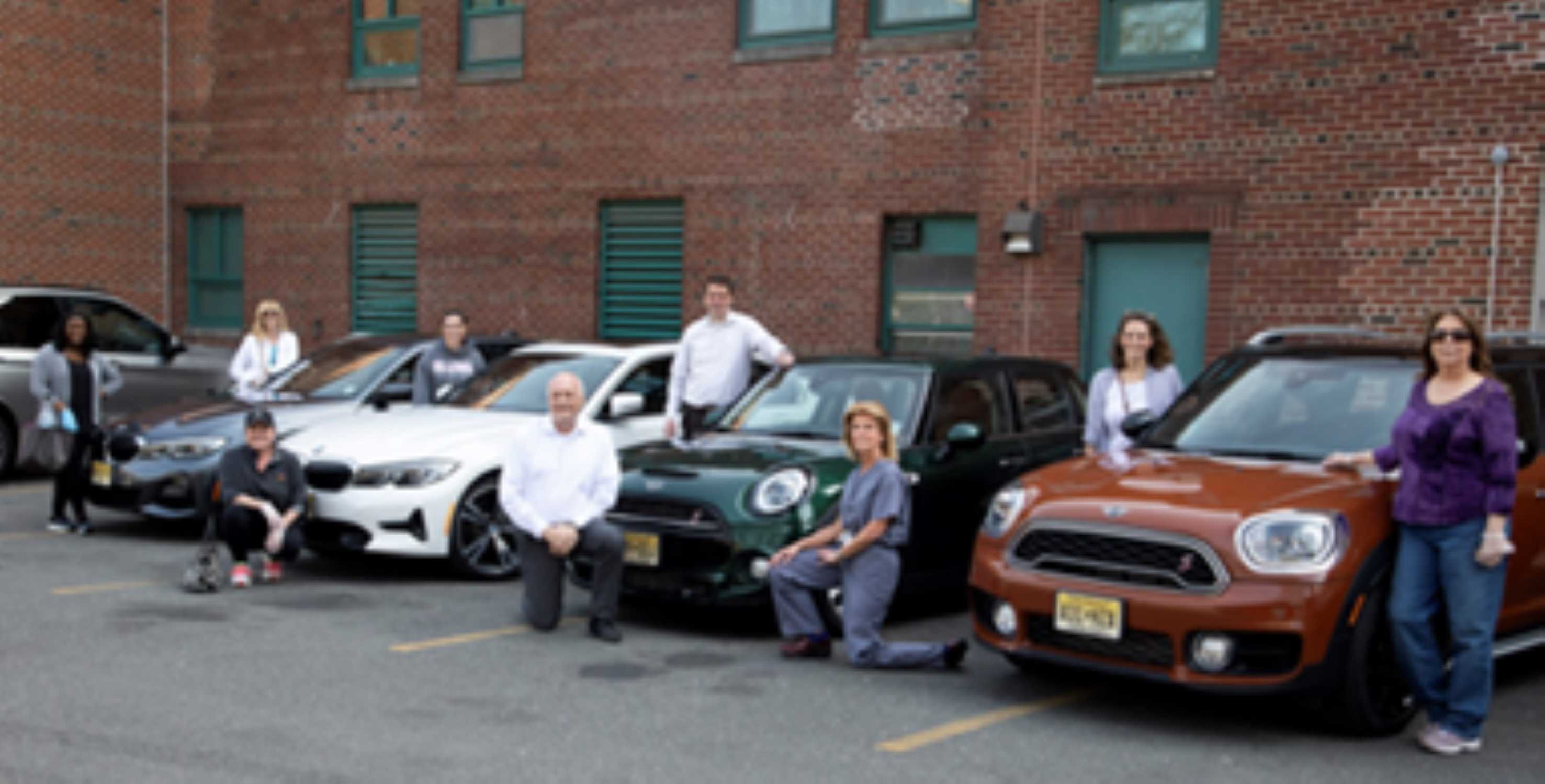
The first death occurred in California, and that state would be particularly hard-hit by the outbreak along with densely populated New York City. By March, New York City was reporting 25 percent of all confirmed cases in the U.S., and infections in the New York metropolitan area had soared past half a million three months later.
On Friday, March 13, the U.S. declared a state of emergency. All but essential businesses were closed, joining most public schools, theaters, and restaurants. BMW of North America (BMW NA) sent its 3,000+ employees’ home from company headquarters in Woodcliff Lake, New Jersey, just 22 miles from Manhattan, as well as BMW Financial Services (BMW FS) in Ohio and other facilities nationwide.
Howard Harris, VP for Legal Affairs and General Counsel, as well as the Chair of the Crisis Management Committee (CMC), led the CMC and advised the Executive Boards of BMW NA and BMW FS in making the decision to close US BMW Group facilities across the country after Friday, March 13. Harris also consulted with the US BMW Group’s South Carolina operations, which out of necessity, required a different set of considerations to be evaluated. Harris’ role as CMC Chair had been instigated by former-President and CEO Tom Purves in anticipation of the avian flu epidemic of 2008. When swine flu arrived a year later, the CMC made sure the US BMW Group had a plan to keep its employees safe, as well as a supply of Tamiflu for those who became infected.
Both of those epidemics were contained swiftly, but COVID-19 had reached pandemic status on March 11, according to a declaration by the World Health Organization. Even prior to that date, Harris and the CMC —particularly a core group of representatives from legal, corporate communications, human resources, financial services, and security/facilities—were attempting to determine the appropriate course of action for the Company.
“On March 13, I was in Nazareth, Pennsylvania at our Regional Distribution Center, where I’d gone to see what we needed to consider in our operational units,” Harris said. “By that week, it became pretty clear that we needed to shut down. Our goal was to protect the health and safety of our associates, protect our business operations, and protect our assets, in that order, with the safety and health of our associates first.”
The CMC had almost a decade earlier led the process to have Business Continuity Plans put in place, which up to March 13 were mainly used for power outages and extreme weather events. Therefore, by 2020 associates already understood how to work remotely. This enabled the shutdown of operations to be more seamless than anyone could have expected.
Even so, the shutdown still came as a shock to those within the
company, including President and CEO Bernhard Kuhnt.
“We’d just had our dealer meeting in Boca Raton, and within a
few weeks the whole world collapsed,” Kuhnt said. “We departed the
office on March 13, and I thought we’d be back in the office at the
beginning of May or so. Little did we know that we’d have several
months where no one was allowed to go into the Woodcliff Lake
[headquarters] based on the local rules and regulations, and that a
year later we still wouldn’t be at full capacity.”
Working from home kept associates safe, but it made performing some tasks challenging despite the Crisis Committee’s preparations. “Not everyone had a functioning laptop with all the capabilities you need,” Kuhnt said, “so we did a lot of hardware and software purchases to enable the company to be as good as possible, and to remain flexible under that environment.”
Most presciently, the U.S. BMW Group’s customer service call center in Ohio placed a large order for laptop computers just before supplies became constrained, making it possible for associates to provide uninterrupted customer service during the crucial period of spring 2020. That allowed BMW FS to adjust payment schedules in the event of job loss or other difficulties, and to extend vehicle warranties and maintenance plans while offering no-cost vehicle pickup and delivery when service was required. (Although what was “essential” and what was not was not always clear under federal, state, and local laws and regulations. Ultimately, dealership service departments were deemed essential in many states and thus remained open with limited staffing and reduced customer interaction).
With the economy at a near-standstill and commuting curtailed, new-car sales plummeted nationwide. BMW of North America had started 2020 with an attractive lineup that included a number of new models, but the first quarter of 2020 saw sales slump by 15.3 percent compared to the same period in 2019. The second quarter of 2020 would be even worse, with sales falling by 39.3 percent compared to Q2 2019.
Those numbers reflected COVID-19’s increasingly severe impact on public health, particularly in the Northeast. By the beginning of May, confirmed COVID deaths in New York City approached 20,000, overwhelming hospitals and morgues and forcing the city to store bodies in refrigerated trucks prior to burial. “Around 30 million people live in New York and New Jersey, but despite having less than half the population of Germany, the death rate was significantly higher in this area,” Kuhnt said. “It was a very severe situation, which authorized severe actions.”
Even so, BMW NA needed to ensure its survival as a business while protecting the health of its associates. That meant continuing to sell cars under both the BMW and MINI nameplates (Rolls-Royce Motor Cars NA as well). The latter was especially hard-hit by the pandemic thanks to its younger and more financially vulnerable customer base, with sales falling by 35.1 percent in Q1 of 2020 and by 41.5 percent in Q2. Those numbers forced the MINI Sales and Marketing team to adapt quickly, particularly after community-focused events like MINI Takes the States were canceled.
Where online retailing was concerned, the MINI leadership team—VP of MINI Americas Mike Peyton, Head of Sales and Aftersales Claude Bruni, and Head of Marketing and Product Patrick McKenna—realized early on that the brand was far behind the competition.
Since most off-the-shelf software was focused on generating leads rather than making sales, BMW Financial Services and MINI executives decided to work with FAIR to build their own platform. (Now defunct, FAIR was a FinTech vehicle subscription company in which BMW owned a small stake.) FAIR declared bankruptcy before the project could be completed, but co-founder Georg Bauer—who’d earlier spent seven years as CEO of BMW Financial Services worldwide—shepherded the project to a new company, Netsol.
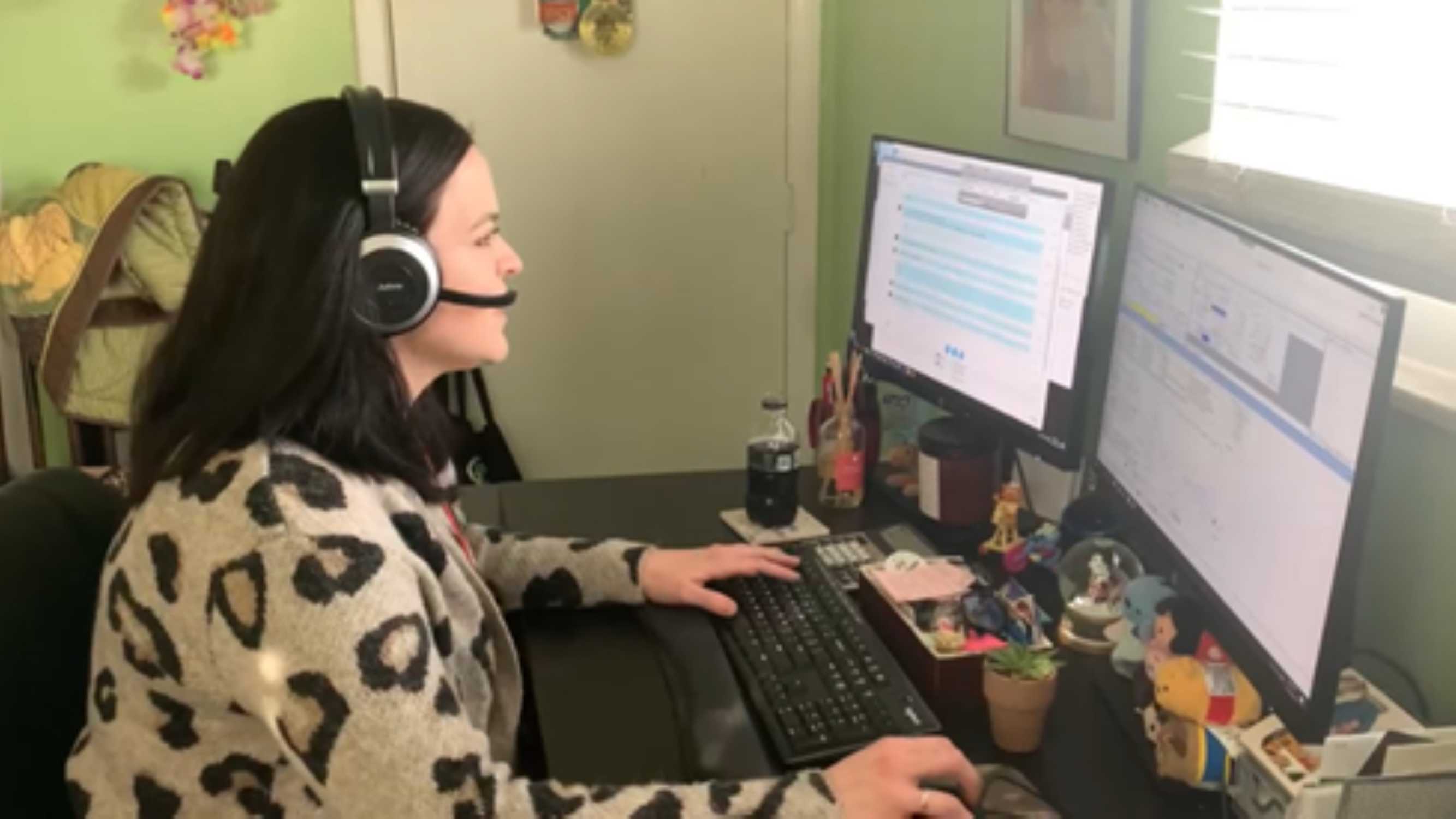
“We built a tool called MINI Anywhere that was beautiful, clean, and kind of audacious, because we were the smallest car company in the country and we had a bespoke digital retail solution which J.D. Power ranked as one of the best in the industry for four consecutive years,” McKenna said.
MINI Anywhere allowed customers to complete the entire transaction online, from selecting a car to financing the sale. “What separated it from other tools is that it offered a real-time credit decision, contracting, and a digital signature that was completely validated by MINI Financial Services,” McKenna said. “Most digital solutions are just lead generators, but this allowed you to literally transact the car.”
MINI Anywhere facilitated the transaction, but the sale was still processed through the customer’s local MINI dealer. U.S. franchise laws required MINI Anywhere to comply with rules and regulations in all 50 states, which can vary widely. That 50-state dynamic played out for the e-commerce mechanisms adopted by BMW alongside MINI, and it mirrored the U.S. response to COVID-19, which varied dramatically throughout the country.
“The pandemic was a very complicated legal situation with all the federal guidelines and state executive orders and regulations that didn’t align,” Harris said. “Basically, you had 50 states with different approaches and different rules. We were doing daily updates of the rules in place in each state, which was purely legal, but the changes often were driven by new learnings, new procedures in the medical community, or with respect to Personal Protective Equipment (PPE). This also led to rapid changes in terms of shutting operations down or opening things up on a daily and weekly basis.”
States in close proximity to New York, including New Jersey, were especially restrictive, which matched BMW NA’s approach to the pandemic. “We were always trying to be on the cautious side in going back to work at BMW North America,” Kuhnt said. “We did everything we could do from masks to cleaning, to using Plexiglas to separate people, to comply with the regulations.”
In other regions of the country, the lack of restrictions allowed BMW NA to keep selling vehicles in a close to usual manner. “Everything was closed here in New Jersey or on the West Coast, but in some areas of the country, it was business as usual,” said Executive Vice President of Operations, Shaun Bugbee. “We really had to adapt our approach. Some of our sales managers were still visiting stores, while others were doing things remotely.”
In Spartanburg, South Carolina, BMW Manufacturing was subject to few restrictions from the state. When the plant shut down from March 29 through May 4, 2020, it did so in response to supply-chain issues as well as a drop in demand. Associates performed maintenance and repairs, and they set up new work processes that would increase social distancing and sanitation once the plant resumed operation, initially with one shift per day rather than two. “They took a lot of precautions,” Harris said. “And in an overly cautious move, the plant acquired a machine to make face masks. We had to figure out what grade they would be, and what were the laws and regulations for their classification before they could be used.”
Across the street, COVID-19’s interruption to the BMW Performance Center’s driving schools was even shorter. “We shut down for maybe three weeks [in Spartanburg],” said Daniel Gubitosa, head of operations for the Performance Center. “We got a lot of support from the plant to have the right PPE in place. We also instituted procedures, like wiping down the cars with disinfectant and restricting vehicles to a single driver rather than the normal two. “I couldn’t see just throwing in the towel. We had to find a way to keep going.”
With so few options for activities or entertainment, customers were eager to get behind the wheel. “They’d been stuck at home, and they couldn’t wait to get out! They were all frustrated!” Gubitosa said. “[At the Performance Center], people were relieved that they could do something and feel safe. You’re outside, relatively, you’re in a car by yourself, so people felt safe.”
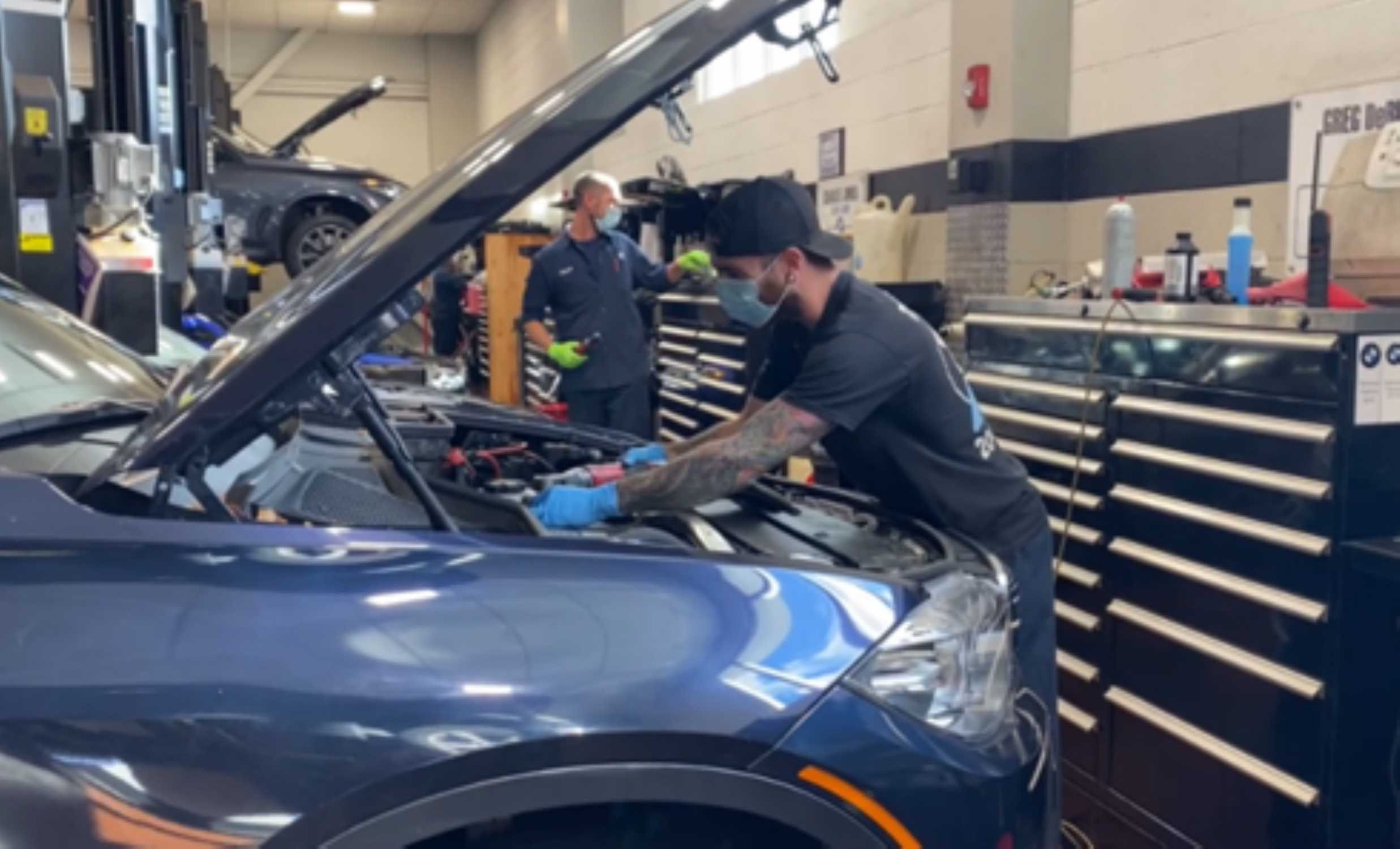
The Performance Center’s West Coast operations in Thermal, California wouldn’t reopen until late fall 2020, but even in relatively restrictive New Jersey, BMW NA was able to stage an Ultimate Driving Experience at MetLife Stadium during the summer of 2020. “I and others on the CMC went down to check the precautions,” Harris said. “We tried to get the best information we could from our insurance company, from medical professionals, and we took in all the information that we had and used it to aid holding an event with proper precautions. Those learnings proved to be fruitful for future events.”
Although outdoor activities were deemed relatively safe, returning to the office remained problematic. Like every organization, BMW NA replaced in-person meetings with virtual meetings, using new technology to hold business meetings. “They were probably run better than in real life, because they were very matter of a fact,” Kuhnt said. “We missed the camaraderie, being together, but we tried to bridge that as well as possible given this completely new situation.”
That meant using the same technology for virtual happy hours, which helped the associates maintain camaraderie. “The ability to have visual calls was, frankly, I think critical to our success,” Harris said. “It kept people engaged, along with the ‘Making It Work’ series of video snippets.”
The Making It Work videos became part of BMW NA’s regular updates to its employees, a way of humanizing the company during a potentially alienating period. “Executives would film themselves at home, talking about what they were doing, how the business was running, what was happening, and how the teams were making it work around the country no matter where they were,” said Mariella Kapsaskis, Head of Corporate and Product Communications for BMW Region Americas and part of the core Crisis Team during the pandemic. “It was great. You’d see people with long hair, beards, children running in the background. It was all very real and unfiltered.”
BMW NA and BMW FS did indeed “make it work.” Thanks to a proactive sales strategy as well as effective online sales tools, sales hit a new record in September, leading to a much smaller year-to-year decline in Q3 2020: 16.2 percent for BMW, 11.9 percent for MINI compared to the same period in 2019.
“We had aggressive loyalty programs so that people who were coming to the end of their lease, and who we knew had to make a decision, would get called to action, as we say in the sales world,” said Shaun Bugbee, Vice President of Operations. “We would get the conversation going to say, for instance, ‘Your lease is going to end at the end of May. Your payment now is $589 a month, and we can get you in a brand-new X3 for $600 a month.”
At year’s end, BMW NA’s sales stood at 278,732 BMW and MINI vehicles, a 17.5 percent decline from 2019’s total of 338,003 vehicles. That was slightly higher than for the US auto industry overall, which saw a 14.5 percent decline in sales from 2019 to 2020. Much of that decline was caused by COVID-19 closures, the rest by supply-chain issues, including shortages of the computer chips used by the BMW Group’s electronics-intensive vehicles.
Interestingly, COVID affected not only how many vehicles BMW NA sold but the manner in which it sold them. With so many customers unable to visit dealerships, twice as many as usual opted to configure their vehicles individually rather than buying from dealer inventory. This allowed dealers to stock fewer vehicles and reduce their expenses accordingly, and in most cases, it didn’t entail a long wait for customers. “One of the beauties of our business here in the US is that about 63 percent of our volume is SUV, with the majority coming from Spartanburg,” Bugbee said. “A customer can order a vehicle at the beginning of the month and have it delivered by the end of the month.”
As parts shortages eased and vaccines against COVID became available in late December 2020, ‘Making It Work’ meant returning to the office—at least part-time. “People were working [from home] harder than they probably ever had, and for more hours of the day but during the course of 2020 we thought there needed to be an in-office presence at some point,” Harris said.
BMW NA and BMW FS didn’t mandate vaccination for its employees, but company policies encouraged it, along with the use of masks and sanitation equipment when associates were required to return to Woodcliff Lake at least two days per week. “We were always trying to do the right thing, and if people were going to come back into the office, they needed to feel safe,” Harris said.
At the end of August 2021, BMW NA President and CEO Bernhard Kuhnt swapped jobs with Sebastian Mackensen, becoming Senior VP for BMW Group’s home market of Germany while Mackensen took over at Woodcliff Lake. A year and a half into the pandemic, the availability of vaccines had eased the rate of transmission as well as the severity of infections, but COVID remained an issue.
“What was mainly difficult was international travel,” Mackensen said, “but we also had our ups and downs in Bergen County. We opened the office and had to close it down again, and then we had to decide to bring everyone back. And then we had to see: Do we need a mask mandate? Do you wear the mask when you walk into the building, and also when you sit at your desk? How many people should be in a certain size of room? We also had to manage fear, which for some people existed while others couldn’t care less. We tried to be transparent and considerate, but also to stay in business. It was a bit of a roller coaster.”
Those considerations saw remote work become normalized within BMW NA, with associates allowed to work from home two days per week. No more than 60 percent of associates are working at the Woodcliff Lake headquarters at any given time, and the building has been reconfigured in the manner of a co-working space, with most offices replaced by unassigned workstations, lockers, and common areas where associates can collaborate.
To date, COVID-19 has caused an estimated 1.2 million deaths in the United States alone, but to the best of their knowledge BMW NA and BMW FS recorded no fatalities from in-office transmissions and very few fatalities for out of office transmissions. “I think that’s the thing we’re most proud of,” Harris said. “Our peoples’ health and welfare were always put first, but we were cognizant that we needed to keep the business running and enable it to be successful.”
Indeed, BMW NA’s and BMW FS’ Business Continuity Plans helped the company mitigate the pandemic’s economic effects, which saw countless businesses in the U.S. close altogether, with the loss of some 40 million jobs and trillions of dollars. In 2021, BMW NA’s automobile sales recovered to almost pre-pandemic levels, with annual sales of 336,644 automobiles representing just 1,359 fewer than the total for 2019. In 2023, BMW NA posted record sales of 362,244 automobiles in 2023, then set another new record by selling 371,346 automobiles in 2024.
“There was no rule book, and we’d never gone through a pandemic
before,” Harris said. “But I would judge our response by the results,
by the health and safety of our employees and also how well the
business did at the time. I would venture to say that we probably
handled it better than most companies in the United States.”